Can Aging Be "Treated"? The Scientific Case for Living to 120, Through Senolytics Research

"Aging is a natural process and cannot be reversed" -- this long-held assumption in the medical community is now being shaken at its foundations. In 2023, the World Health Organization (WHO) assigned new codes to aging-related conditions in the International Classification of Diseases (ICD-11), effectively opening the door to treating aging as a disease. Senolytics (drugs that eliminate senescent cells), epigenetic reprogramming, caloric restriction -- multiple research approaches are simultaneously advancing to the clinical stage. Today, "living to 120" is no longer fantasy, but a scientifically testable hypothesis.
The Discovery of Senescent Cells as a "Toxic Source"
As human cells repeatedly divide, they eventually stop dividing and become "senescent cells." The problem is not merely that senescent cells cease to function -- they continuously release inflammatory substances known as SASP (Senescence-Associated Secretory Phenotype) into their surroundings. Research since the 2000s has revealed that this chronic inflammation is the common underlying mechanism of age-related diseases including atherosclerosis, diabetes, Alzheimer's disease, and cancer.
In 2011, Dr. Jan van Deursen and colleagues at the Mayo Clinic demonstrated that selectively eliminating senescent cells from genetically modified mice significantly delayed age-related organ decline (Nature, 2011). This groundbreaking discovery became the starting point of senolytics research -- the idea that aging could be treated by pharmacologically removing senescent cells.
Senolytics: Eliminating Senescent Cells with Drugs
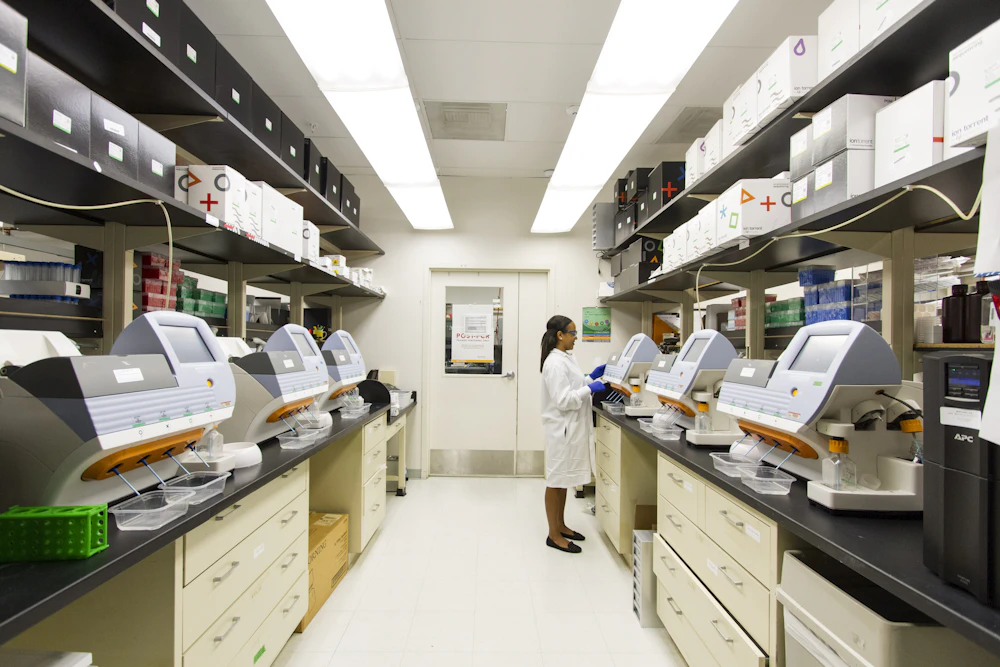
The research team led by Dr. James Kirkland at the Mayo Clinic discovered that a combination of the existing cancer drug dasatinib and the natural flavonoid quercetin -- known as "D+Q therapy" -- can selectively eliminate human senescent cells.
In 2019, results from the world's first human clinical trial, conducted on patients with idiopathic pulmonary fibrosis (IPF), were published in EBioMedicine. After just three weeks of intermittent dosing, patients' six-minute walk distance improved by an average of 21.5 meters -- an improvement that existing approved drugs had failed to achieve. That same year, the reduction of senescent cells in the human body was confirmed for the first time in patients with diabetic kidney disease.
A notable feature of senolytics is that they work through "intermittent dosing." Because senescent cells do not re-accumulate in the short term, administration for just a few days per month is considered sufficient. This potentially means a significant reduction in the risk of side effects. Phase II clinical trials are currently underway at multiple institutions including the Mayo Clinic, targeting a wide range of conditions such as Alzheimer's disease, osteoarthritis, and frailty.
Epigenetic Reprogramming: Turning Back the Clock of Aging
Professor David Sinclair of Harvard Medical School has long championed the hypothesis that the root cause of aging lies not in mutations to the DNA sequence itself, but in the loss of epigenetic information -- the information that controls how genes are "read." In 2023, the Sinclair lab published a landmark paper in Cell, demonstrating that artificially inducing epigenetic changes in mice accelerates aging, while conversely introducing three Yamanaka factors (OCT4, SOX2, KLF4 -- the OSK factors) reversed glaucoma in aged mice.
In 2024, even more striking results were reported. Elderly mice that received OSK gene therapy saw their median survival extended by 109%. Translated to human terms, this would theoretically be equivalent to an 80-year-old living past 160. Of course, results in mice cannot be directly applied to humans, but in 2024, the FDA approved the first-in-human OSK gene therapy clinical trial by Life Biosciences, with human data expected within a few years.
The CALERIE Trial and Fasting-Mimicking Diets: Scientific Validation of Dietary Interventions
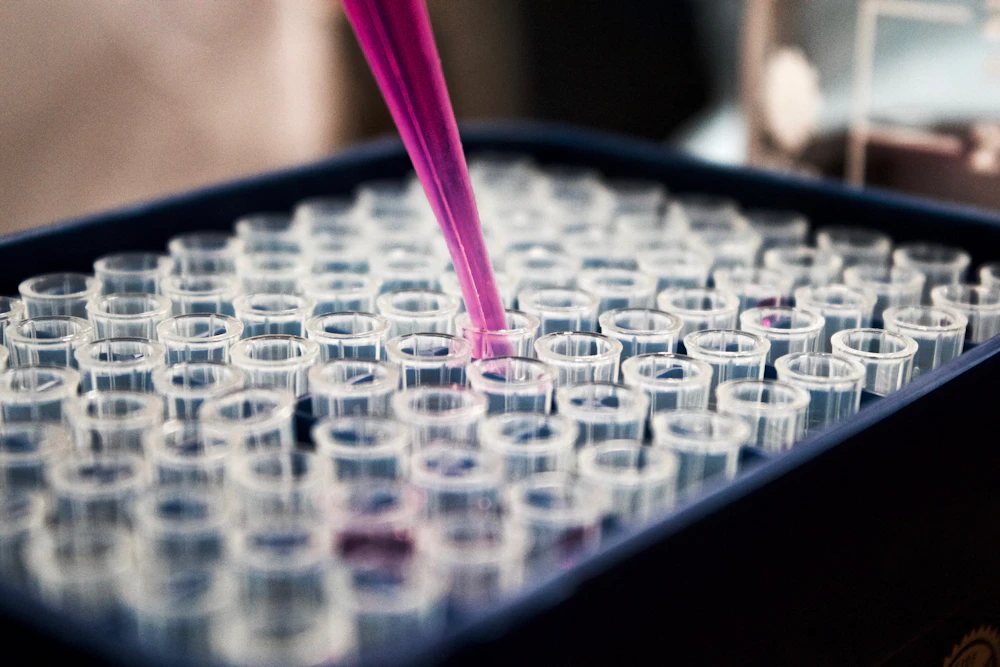
Scientific evidence for suppressing aging through dietary interventions is accumulating beyond drugs and gene therapy alone. The CALERIE trial, funded by the U.S. National Institutes of Health (NIH), was the world's first large-scale randomized controlled trial (RCT) examining the long-term effects of caloric restriction in healthy, non-obese adults.
The analysis published in Nature Aging in 2023 yielded noteworthy results. The group prescribed a 25% caloric restriction (which actually achieved 12-15% restriction) showed a 2-3% deceleration in the rate of aging over two years. This effect, measured by the DunedinPACE epigenetic aging velocity index, translates to a 10-15% reduction in mortality risk -- comparable to the effect of smoking cessation interventions. Furthermore, a 2018 report in Cell Metabolism confirmed a 20-27% reduction in oxidative stress.
Meanwhile, Professor Valter Longo of the University of Southern California developed the "Fasting-Mimicking Diet (FMD)" as an alternative to continuous caloric restriction. A study published in Nature Communications in 2024 reported that participants who completed three cycles of a program involving just five days per month of a specific low-calorie diet saw their biological age decrease by an average of 2.5 years. This was the first food-based rejuvenation effect achieved without chronic dietary restriction.
Measuring Biological Age: The Evolution of Epigenetic Clocks
Accurately measuring "biological age" is essential for evaluating the effects of aging interventions. The DNA methylation-based "Horvath clock," developed by Professor Steve Horvath of UCLA in 2013, was the pioneer in this field. Since then, measurement precision has rapidly improved with GrimAge (v2: 2022), DunedinPACE, the nucleosome positioning clock (2024), and the histone modification clock (2025).
The development of these biomarkers has made it possible to evaluate the effects of aging interventions in months rather than years. This has dramatically accelerated the pace of clinical trials and is driving the practical application of senolytics and epigenetic therapies.
Is Living to 120 Scientifically Possible?
The current verified record for the oldest human is Jeanne Calment of France, who lived to 122 years and 164 days (died 1997). If senolytics, epigenetic reprogramming, and caloric restriction were combined, 120 years is within theoretically achievable range.
However, there is a crucial distinction to be made. Simply "living longer" is fundamentally different from "living longer in good health." Japan's average life expectancy is 81.05 years for men and 87.09 years for women, but the gap between life expectancy and healthy life expectancy is 8.49 years for men and 11.63 years for women (Ministry of Health, Labour and Welfare, 2022). The real question is not "how far can we extend lifespan?" but "how can we close the gap between healthy life expectancy and total lifespan?" -- in other words, the maximization of healthspan.
Aging research is no longer confined to basic science. Clinical trials for senolytics are underway, human trials for epigenetic therapy have begun, and the evidence base for dietary interventions is being established. The scientific case for living to 120 is steadily building.
Sources & References
- Baker, D.J. et al. "Clearance of p16Ink4a-positive senescent cells delays ageing-associated disorders." Nature, 479, 232-236, 2011.
- Justice, J.N. et al. "Senolytics in idiopathic pulmonary fibrosis: Results from a first-in-human, open-label, pilot study." EBioMedicine, 40, 554-563, 2019.
- Hickson, L.J. et al. "Senolytics decrease senescent cells in humans: Preliminary report from a clinical trial of Dasatinib plus Quercetin in individuals with diabetic kidney disease." EBioMedicine, 47, 446-456, 2019.
- Yang, J.H. et al. "Loss of epigenetic information as a cause of mammalian aging." Cell, 186(2), 305-326, 2023.
- Sinclair, D.A. et al. OSK gene therapy median lifespan extension in aged mice. Harvard Medical School / Life Biosciences, 2024.
- Waziry, R. et al. "Effect of long-term caloric restriction on DNA methylation measures of biological aging in healthy adults from the CALERIE trial." Nature Aging, 3, 248-257, 2023.
- Redman, L.M. et al. "Metabolic Slowing and Reduced Oxidative Damage with Sustained Caloric Restriction." Cell Metabolism, 27(4), 805-815, 2018.
- Brandhorst, S. et al. "Fasting-mimicking diet causes hepatic and blood markers changes indicating reduced biological age and disease risk." Nature Communications, 15, 1309, 2024.
- Horvath, S. "DNA methylation age of human tissues and cell types." Genome Biology, 14, R115, 2013.
- Ministry of Health, Labour and Welfare (Japan). "Healthy Life Expectancy Estimates, 2022."
HORIZON Newsletter
Get the latest health and longevity research delivered twice a month.
Free to subscribe. Unsubscribe anytime.
FROM REFIT INC.
Interested in this topic?
ReFit Inc. provides evidence-based corporate wellness programs and preventive health solutions. We help organizations improve employee well-being and productivity through science-backed approaches.
Learn more about ReFit Inc.RELATED ARTICLES

