The Science of Telomeres and Aging: What Chromosome Endpoints Reveal About Lifespan

Without the plastic cap at the tip of a shoelace, the lace would quickly fray. A similar protective structure exists at the ends of our chromosomes -- the telomere. With each cell division, telomeres shorten slightly, and when they reach a critical length, the cell either stops dividing or undergoes programmed death (apoptosis). Over half a century of research has revealed that this seemingly simple mechanism lies at the heart of aging, one of biology's most complex processes. Telomere research was recognized with the Nobel Prize in Physiology or Medicine in 2009, and the field has since grown into a cornerstone of aging science.
What Are Telomeres: The "Shoelace Tips" That Protect Chromosomes
Telomeres are complexes of repetitive DNA sequences and proteins located at both ends of eukaryotic chromosomes. In humans, telomeres consist of the six-base sequence TTAGGG repeated several thousand times, spanning approximately 10,000 to 15,000 base pairs in newborns. These repetitive sequences are coated by a six-protein complex called shelterin, which prevents chromosome ends from being misrecognized as DNA damage (de Lange, 2005). As long as telomeres maintain sufficient length, chromosomes remain stable and genetic information continues to be copied accurately.
However, DNA polymerase has an inherent limitation: it cannot fully replicate chromosome ends. This is known as the "end replication problem," theoretically predicted by Russian theoretical biologist Alexei Olovnikov in the 1970s and independently noted by James Watson. With each cell division, telomeres shorten by 50 to 200 base pairs. When telomeres reach a critical length (approximately 5,000 base pairs), a DNA damage response is triggered, and the cell enters an irreversible state of growth arrest. This is the molecular basis of the "Hayflick limit" discovered by Leonard Hayflick in 1961. Normal human somatic cells reach this limit after approximately 50 to 70 divisions.
The discovery of telomeres themselves dates back to the 1930s. In 1938, Hermann Joseph Muller observed that the ends of fruit fly chromosomes possessed a special structure and coined the term "telomere" from the Greek words telos (end) and meros (part). Around the same time, Barbara McClintock also reported the protective function of chromosome ends in maize. However, it would take another 40 years before the molecular structure of telomeres was elucidated.
The Discovery of Telomerase and the Nobel Prize

In 1978, Elizabeth Blackburn at Yale University was the first to identify a repetitive sequence -- TTGGGG -- at the chromosome ends of the single-celled organism Tetrahymena (Blackburn & Gall, 1978). This was the first direct proof of telomere molecular structure. Then in 1984, Blackburn and her graduate student Carol Greider discovered enzymatic activity in Tetrahymena cell extracts that could extend telomeric DNA. This enzyme was later named "telomerase" (Greider & Blackburn, 1985). Telomerase is a reverse transcriptase composed of an RNA component (TERC) and a protein catalytic subunit (TERT), which synthesizes telomere repeat sequences using its own RNA template.
Jack Szostak at Harvard University demonstrated that telomere sequences could stabilize chromosomes even in cells of different species, revealing that telomere function is evolutionarily conserved. The achievements of these three scientists culminated in the 2009 Nobel Prize in Physiology or Medicine, catapulting telomere research into the spotlight.
However, telomerase has a dual nature. In normal human somatic cells, telomerase activity is largely suppressed, which is the cause of the Hayflick limit. On the other hand, approximately 85-90% of cancer cells have reactivated telomerase, enabling unlimited proliferation (Shay & Wright, 2011). For this reason, simply activating telomerase as a "key to immortality" could increase cancer risk, and telomere intervention research constantly grapples with this dilemma.
Epidemiological Evidence Linking Telomere Length to Mortality Risk
Does telomere shortening actually affect human health and lifespan? The first large-scale epidemiological evidence addressing this question came from a study by Cawthon et al. published in The Lancet in 2003. This study tracked 143 individuals aged 60 and older in Utah and found that the mortality rate in the group with shorter telomeres (bottom 50%) was approximately 1.86 times higher than in those with longer telomeres (top 50%). The risk of death from infectious disease was 8.54 times higher, and cardiovascular mortality risk was 3.18 times higher (Cawthon et al., 2003). Although the sample size was small, this was a groundbreaking study as the first prospective research to demonstrate a link between telomere length and mortality.
In 2015, Rode et al. used data from the Copenhagen General Population Study to examine the relationship between telomere length, disease, and mortality in a large cohort of approximately 64,000 individuals (Rode et al., 2015, BMJ). This study confirmed that individuals with the shortest telomeres (bottom 10%) had a 23% higher overall mortality risk, 26% higher cancer mortality risk, and 18% higher cardiovascular disease mortality risk compared to those with the longest telomeres (top 10%). Furthermore, Mendelian randomization analysis suggested a possible causal relationship between telomere shortening and disease risk.
Telomere length measurement methods have also continued to evolve. The initial standard method, Terminal Restriction Fragment (TRF) analysis, required large amounts of DNA and had low throughput. The quantitative PCR (qPCR) method developed by Cawthon in 2002 dramatically reduced DNA requirements and made epidemiological applications feasible. More recently, methods such as Single Telomere Length Analysis (STELA) and TeSLA have been developed, enabling measurement of telomere length on individual chromosomes. The Telomere Shortest Length Assay (TeSLA) excels particularly at detecting the shortest telomeres, bringing new precision to aging research.
When Stress Erodes Telomeres: The Epel-Blackburn Study
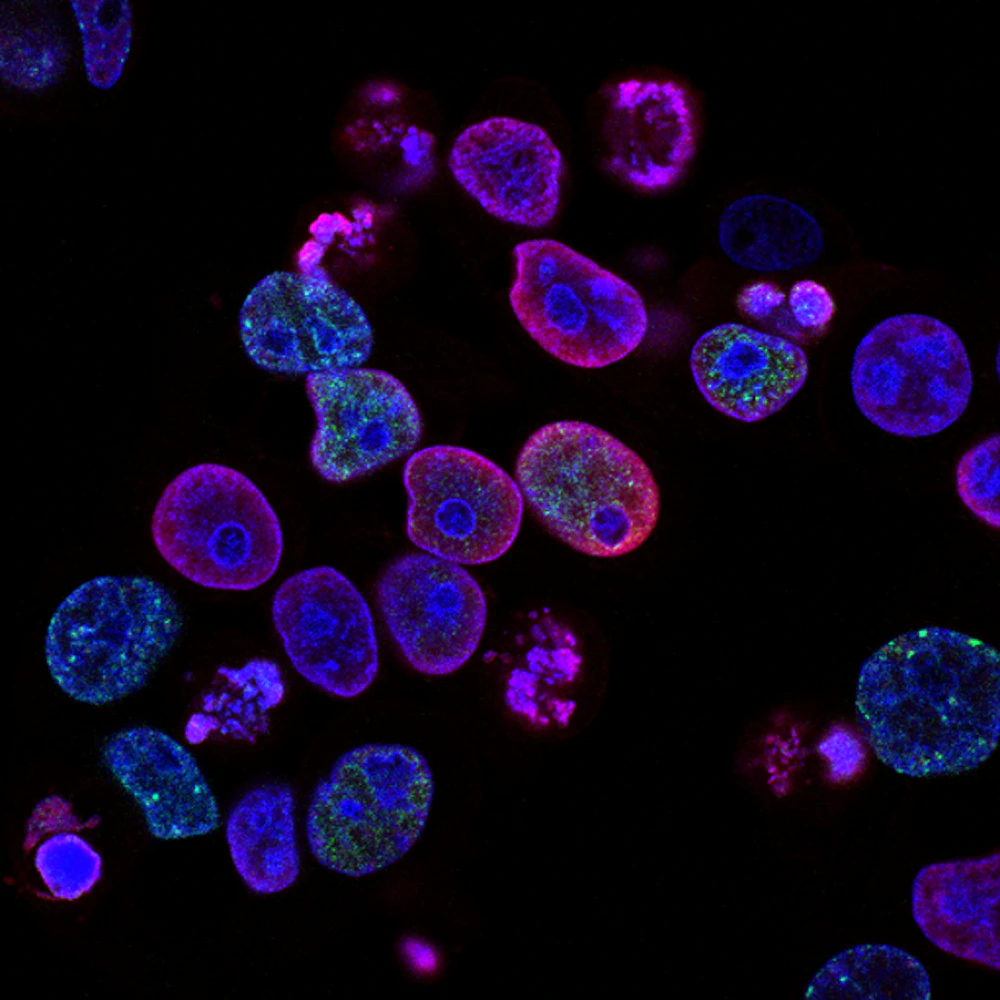
The research that extended telomere science from molecular biology into mind-body medicine was the collaboration between health psychologist Elissa Epel and Elizabeth Blackburn at UCSF (University of California, San Francisco). In 2004, they published a landmark paper in the Proceedings of the National Academy of Sciences (PNAS). Comparing 39 mothers caring for children with severe chronic illnesses to 19 mothers of healthy children, the study revealed that mothers with longer caregiving histories had shorter telomeres and reduced telomerase activity (Epel et al., 2004). In the most prolonged caregiving group, telomeres were approximately 550 base pairs shorter than in the low-stress group -- equivalent to roughly 9 to 17 years of accelerated biological aging.
This study was the first empirical demonstration that psychological stress accelerates aging at the molecular level, bridging psychoneuroimmunology and aging biology. Subsequent research has linked various psychosocial factors -- including depression, anxiety disorders, childhood trauma, and socioeconomic disparities -- to telomere shortening. Shalev et al. (2013) showed in a longitudinal study that even in children aged 5 to 10, exposure to violence accelerated telomere shortening.
Conversely, evidence suggests that stress reduction may have a protective effect on telomeres. Ornish et al. (2013) published a five-year prospective study in The Lancet Oncology showing that low-risk prostate cancer patients who received comprehensive lifestyle intervention (plant-based diet, moderate exercise, stress management, and social support) had significantly increased telomerase activity and approximately 10% telomere lengthening. The control group experienced approximately 3% telomere shortening, and the difference between groups was statistically significant. A meta-analysis by Conklin et al. (2018) also confirmed a trend toward increased telomerase activity with meditation.
The Challenge and Future of Telomere Extension
Dean Ornish's study was the first RCT to demonstrate the possibility of telomere extension through lifestyle intervention. The finding that telomere length increased by 10% over five years was an important indication that telomere shortening is not irreversible. However, this study was small-scale (n=35) and targeted a specific population of prostate cancer patients, so caution is warranted in generalizing the results.
As a more direct approach, telomerase activation through gene therapy has been tested in animal models. Dr. Maria Blasco's laboratory at Spain's National Cancer Research Centre (CNIO) introduced the telomerase gene (TERT) into mice using adeno-associated virus (AAV) vectors. Results reported in EMBO Molecular Medicine in 2012 showed that TERT gene therapy administered to one-year-old (middle-aged) mice extended median survival by 24%, and even in two-year-old (elderly) mice, survival was extended by 13% (Bernardes de Jesus et al., 2012). Crucially, no increase in cancer incidence was observed. Blasco's (2005) comprehensive review in Nature Reviews Genetics on telomeres and cancer provides a theoretical framework suggesting that telomerase activation does not necessarily promote carcinogenesis.
Commercialization of telomere length measurement is also advancing. Several companies offer direct-to-consumer (DTC) telomere testing, but its clinical utility remains debated. An individual's telomere length is merely a snapshot at a given point in time, and leukocyte telomere length does not necessarily reflect telomere length in other tissues. Moreover, qPCR-based measurements show considerable variability between tests, and their ability to accurately predict individual health risks is limited. The American Federation for Aging Research (AFAR) does not recommend making medical decisions based on DTC test results.
The frontier of telomere research is shifting from individual interventions to systems biology approaches. Telomere length is not the sole indicator of aging and needs to be understood as part of the multifaceted aging mechanisms that include epigenetic clocks, mitochondrial function, and proteostasis. In the "12 Hallmarks of Aging" proposed by Lopez-Otin et al. (2023), telomere attrition continues to be positioned as one of the core hallmarks. Half a century of telomere research has solidified the hope that aging is a phenomenon that can be understood and intervened upon at the molecular level. The next challenge is translating this knowledge into safe and effective clinical interventions.
References
- Blackburn, E.H. & Gall, J.G. "A tandemly repeated sequence at the termini of the extrachromosomal ribosomal RNA genes in Tetrahymena." Journal of Molecular Biology, 120(1), 33-53, 1978.
- Greider, C.W. & Blackburn, E.H. "Identification of a specific telomere terminal transferase activity in Tetrahymena extracts." Cell, 43(2), 405-413, 1985.
- Cawthon, R.M. et al. "Association between telomere length in blood and mortality in people aged 60 years or older." The Lancet, 361(9355), 393-395, 2003.
- Epel, E.S. et al. "Accelerated telomere shortening in response to life stress." Proceedings of the National Academy of Sciences, 101(49), 17312-17315, 2004.
- Blasco, M.A. "Telomeres and human disease: ageing, cancer and beyond." Nature Reviews Genetics, 6(8), 611-622, 2005.
- Ornish, D. et al. "Effect of comprehensive lifestyle changes on telomerase activity and telomere length in men with biopsy-proven low-risk prostate cancer: 5-year follow-up of a descriptive pilot study." The Lancet Oncology, 14(11), 1112-1120, 2013.
- Rode, L. et al. "Short telomere length, lung function and chronic obstructive pulmonary disease in 46,396 individuals." Thorax, 68(5), 429-435, 2013; Rode, L. et al. BMJ, 2015.
- Bernardes de Jesus, B. et al. "Telomerase gene therapy in adult and old mice delays aging and increases longevity without increasing cancer." EMBO Molecular Medicine, 4(8), 691-704, 2012.
HORIZON Newsletter
Receive the latest health and longevity research articles twice a month.
Free to subscribe — unsubscribe anytime
FROM REFIT INC.
Interested in the topic of this article?
ReFit Inc. provides evidence-based corporate wellness programs and preventive health solutions. We help organizations improve employee well-being and productivity through science-backed approaches.
Learn more about ReFit Inc.RELATED ARTICLES